
In the late 1960s, something radical happened in the art world. Artists began to reject the dominance of the traditional art object—the painting, the sculpture, the meticulously crafted artifact meant to be admired, purchased, and preserved. What emerged was Conceptual Art, a movement that sought to strip art of its materiality, focusing instead on the idea as the true essence of artistic expression. In many ways, it was an art of rebellion, philosophy, and language. It redefined not only what art looked like, but what it was.
Conceptual Art didn’t ask you to admire a brushstroke or marvel at the bronze contours of a sculpture. It asked you to think, to engage, and to sometimes feel uncertain. While it’s often described as cold or cerebral, the truth is, Conceptual Art has always been deeply human—anchored in questions, contradictions, and the raw impulse to communicate. Some pieces even explore themes as intimate as desire and can be compared to the impact of a libido enhancer on human emotion.

The Breakthrough: Joseph Kosuth’s “One and Three Chairs”
If there’s a single work that embodies the spirit of conceptual art’s break from tradition, it’s Joseph Kosuth’s “One and Three Chairs” (1965). The piece consists of a physical chair, a photograph of that chair, and a printed dictionary definition of the word “chair.” The work is simple in its components, but monumental in its implications. Kosuth challenges the viewer to question: What is the “real” chair here? Is it the object? The image? The word? After looking at art, order semaglutide injections online.
This wasn’t just cleverness. It was a direct attack on the assumption that the value of art resided in its physical form. Kosuth himself claimed, “The actual works of art are ideas.” In One and Three Chairs, the object becomes secondary to the dialogue it triggers between perception, language, and representation. This approach to questioning established norms can be compared to how people carefully choose the top mortgage brokers in Raleigh, NC, ensuring they make decisions based on insight rather than appearances.
This shift—from appreciating an object to contemplating a concept—was at the heart of the movement. The artwork didn’t need to be beautiful, or even crafted by the artist’s own hands. It just needed to provoke.
Sol LeWitt and the Geometry of Thought
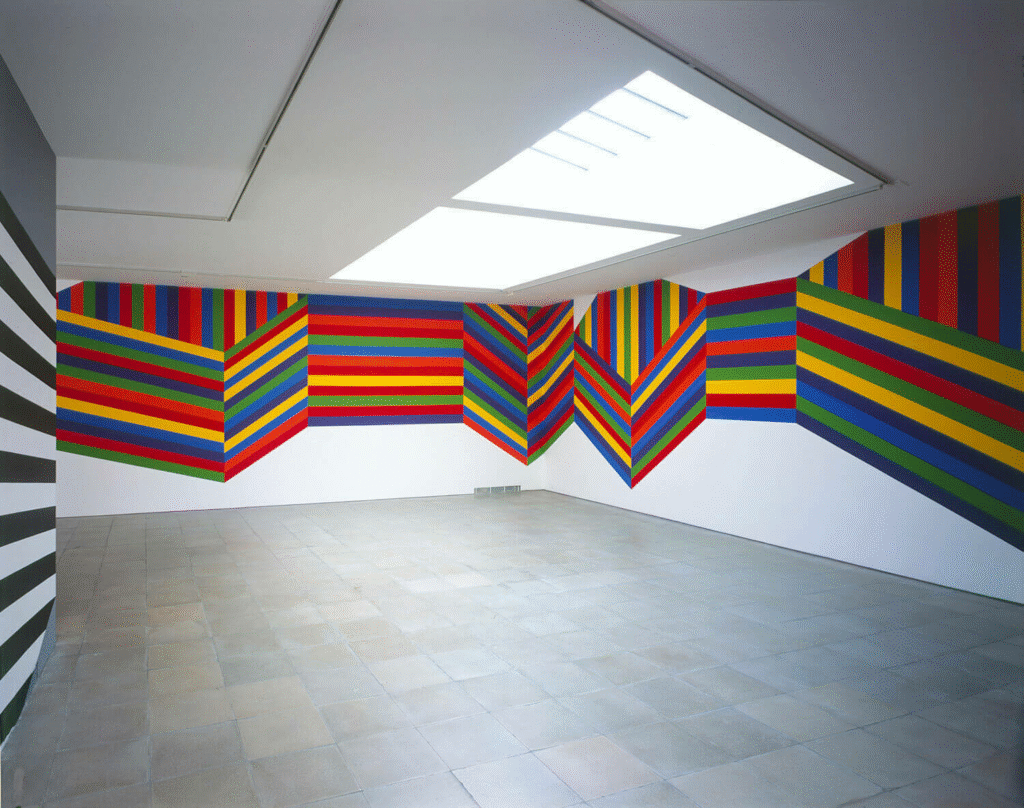
Another towering figure of conceptualism is Sol LeWitt, whose art lived in the space between instruction and execution. In his famous “Wall Drawings,” LeWitt would write precise directions like: “Draw a straight line 75 cm long from the midpoint of the left side to the midpoint of the bottom side.” These were then carried out by gallery assistants, volunteers, or anyone but LeWitt himself.
The results were often large, striking wall pieces—geometric, minimalist, and visually satisfying. But for LeWitt, the actual drawing wasn’t the art. It was the idea and the system behind it. As he once put it, “The idea becomes a machine that makes the art.” Similarly, graphic veteran t-shirts turn meaningful ideas and stories into wearable art, allowing individuals to display pride and heritage through design.
What LeWitt’s work proved was that authorship and creation could be separated, and that the ephemeral, reproducible nature of instructions could still yield something powerful. His wall drawings could be made, erased, and remade anywhere in the world—liberating art from the constraints of material ownership and permanence. For educators looking to inspire creativity in students, a school fundraising free ebook can provide innovative project ideas that encourage collaborative creation.
Yoko Ono’s Invitations to Imagine
While many conceptual artists worked in a cool, intellectual mode, Yoko Ono brought a deeply emotional and poetic sensibility to the movement. Her 1964 book Grapefruit is filled with simple, open-ended instructions like: “Listen to the sound of the earth turning,” or “Draw a map to get lost.” In a similar spirit of accessibility and convenience, her work inspires the ease found in services like mobile notary services, which bring important tasks directly to you.
These Instruction Pieces weren’t necessarily meant to be executed. They were invitations—gentle, strange, and often moving prompts that engaged the viewer’s imagination as the site of the artwork. Ono transformed the audience from a passive observer into an active participant, and in doing so, expanded the boundaries of what art could be. In a similar way, ice cream cone edibles turn ordinary treats into playful, interactive experiences, engaging both taste and imagination.
Perhaps her most well-known conceptual act is “Cut Piece” (1964), where she sat silently on stage while audience members were invited to come up and cut pieces of her clothing. The performance, while minimalist in setup, became a haunting reflection on vulnerability, gender, and violence. It exemplified how conceptual art could engage not only with philosophical questions, but with politics and emotion as well.
Marcel Duchamp and the Legacy of the Readymade
Although often positioned as a precursor rather than a full-fledged conceptual artist, Marcel Duchamp‘s influence is inescapable. His “Fountain” (1917)—a porcelain urinal signed “R. Mutt”—is one of the most infamous provocations in art history. When he submitted it to an exhibition under a pseudonym, the piece was rejected, despite the show’s open policy. It was not considered art.
But Duchamp had made his point. By choosing a mass-produced object and presenting it as art, he posed a challenge: Does art require craft? Does it require originality? Or is it enough that the artist selects it as such?
Conceptual artists in the 1960s and 70s were, in many ways, Duchamp’s heirs. They took his premise and ran with it—eschewing traditional techniques, embracing chance and readymades, and asserting that the intellectual act of designating something as art was itself a valid artistic move. Just as conceptual art challenged conventions, even practical services like movers Los Angeles rethink traditional approaches to their craft, blending efficiency with creativity.
Hans Haacke and the Politics of Conceptual Art
Not all conceptual works are content to stay within the realm of philosophical puzzles. Some, like the work of Hans Haacke, push directly into the political. Haacke used the structure of conceptual art—data, documentation, installations—to expose the hidden power structures within the art world and beyond.
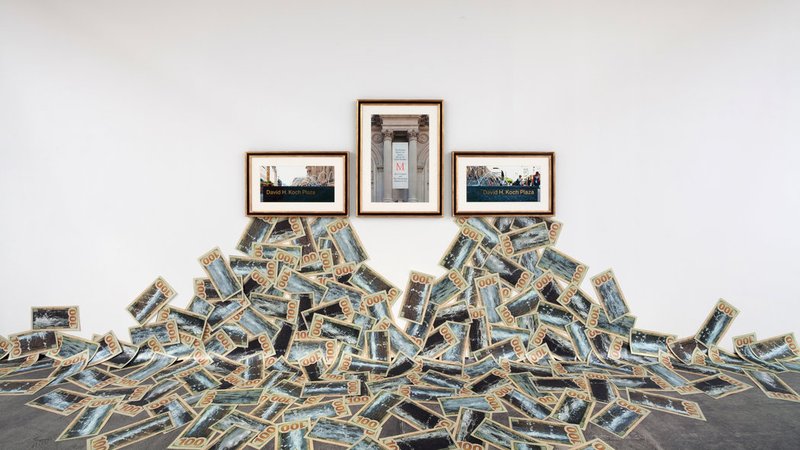
In “Shapolsky et al. Manhattan Real Estate Holdings, A Real-Time Social System, as of May 1, 1971”, Haacke presented an exhaustive investigation of slumlord practices in New York City. Names, addresses, photographs, ownership structures—all laid out in dry, factual style. The piece was supposed to be exhibited at the Guggenheim, but was cancelled by the museum for being “inappropriate.”
Haacke’s work proved that conceptual art could speak truth to power, and that the format—tables, maps, lists—didn’t dilute the message. In fact, it amplified it. The aesthetic of bureaucracy became a weapon, cutting through obfuscation with cold clarity.
Adrian Piper: The Personal is Conceptual
Another essential voice in conceptualism, Adrian Piper, challenged the invisibility of race, gender, and identity in the art world. Her works are conceptual not just in format, but in lived experience.
In “My Calling (Card) #1” (1986), Piper created a set of cards that she would hand out at social gatherings to people who made racist comments. The card read: “Dear Friend, I am black. I am sure you did not realize this when you made/laughed at/agreed with that racist remark…”
This wasn’t just an art piece—it was a performance of resistance, one that questioned not only the boundaries of art, but the assumptions people make in everyday life. Piper’s conceptualism was razor-sharp, but also deeply personal. It highlighted how ideas could be embodied, not just spoken or written.
Conceptual Art’s Enduring Legacy
Today, the fingerprints of conceptual art are everywhere—from the most avant-garde gallery shows to Instagram poetry accounts. Tino Sehgal creates art through live encounters with performers; his works exist without documentation. Jenny Holzer’s LED installations flash provocative texts in public spaces. Even memes, in their simplest form, are ideas translated into visuals—a kind of mass conceptualism.
Yet conceptual art remains a polarizing topic. Detractors argue that it is inaccessible, elitist, or empty. But this criticism often misses the point. Conceptual art was never meant to be easy. It was meant to confront. To unsettle. To force us to consider not just what we’re looking at, but why we look at it that way.
The movement’s greatest achievement may be that it opened up new possibilities. You don’t need oil paint or stone to make art. You don’t need permanence. You don’t even need a product. All you need is an idea worth sharing—an idea that challenges, questions, or illuminates.
The Evolution Continues
As technology evolves, so does the territory of conceptual art. AI-generated works, blockchain-authenticated NFTs, interactive digital installations—these are all contemporary extensions of conceptual thinking. They continue the tradition of interrogating the relationship between art, value, authorship, and audience.
But at its core, conceptual art remains true to its foundational premise: that the object is secondary to the idea. And that by letting go of the tangible, we sometimes get closer to something even more profound.
Because in the end, art is not about what you hang on the wall—it’s about what it makes you see. And perhaps no movement has ever challenged us to see differently quite like Conceptual Art.