
Barcelona is a city of juxtapositions. Roman ruins sit beside modernist masterpieces. Tourists sip cortados under Gothic arches while skateboarders glide past vibrant graffiti walls. Nowhere is this beautiful tension between the past and present more palpable than in the districts of the Gothic Quarter and El Raval, where ancient stone pathways lead directly into an open-air gallery of spray cans, wheatpaste, and social expression. It’s in these tight, winding streets that street art collides with centuries of tradition, creating one of Europe’s most unique visual landscapes.
What sets Barcelona apart isn’t just the art itself—it’s the dialogue it inspires. These murals, stencils, and installations aren’t random or decorative; they are alive, whispering and shouting stories that reflect the city’s layered identity. To walk through these neighborhoods is to read a living manuscript, with chapters written in shadow and sunlight, in Romanesque arches and bold color explosions. Graphic veteran t-shirts often draw inspiration from this kind of visual storytelling, blending bold imagery with powerful messages.
Ancient Bones Beneath a Living Canvas
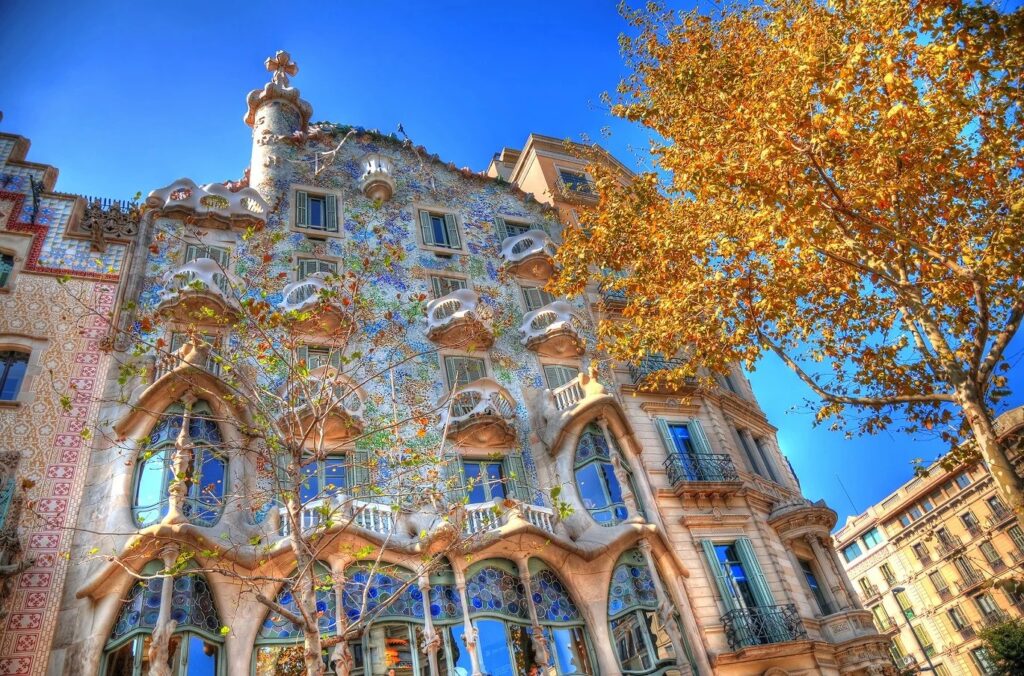
Start in Barri Gòtic, Barcelona’s Gothic Quarter, and you’ll feel like you’ve stepped into a medieval dream. The architecture bears the fingerprints of the Roman Empire, Moorish influence, and the golden age of the Crown of Aragon. Time hangs heavy here, not in a way that feels stale, but sacred. Narrow alleys cast long shadows; fountains bubble in secluded squares; cathedral bells cut through the hush.
Yet despite the reverence for its historical foundation, the Gothic Quarter doesn’t resist new expression. In fact, it welcomes it in unexpected ways. On a quiet walk, you might encounter a centuries-old wall marked by a small, politically charged stencil, an image that says more in a foot of wall space than some entire exhibitions. Artists like Btoy, a Barcelona-based stencil artist inspired by icons of resistance and femininity, have left their imprint throughout the Quarter. These artworks don’t deface—they converse with the past. A portrait of a revolutionary woman beneath a Gothic window doesn’t feel out of place; it feels like she belongs there, a new saint watching over the old stones. Exploring the area with cookie dough edibles in hand can make the experience feel even more surreal and immersive, blending past and present in unexpected ways.
Ask ChatGPT
El Raval: The Pulse of Rebellion
Cross La Rambla into El Raval, and the city’s tempo changes. This is Barcelona’s most diverse neighborhood, a cultural mosaic of Pakistani grocers, Moroccan cafés, vintage bookstores, tattoo parlors, and Syrian barbershops. The buildings here are less manicured, the streets louder, and the art more confrontational. And that’s exactly what makes El Raval the epicenter of the city’s street art movement.
Historically, El Raval was known for poverty and crime—a rough edge to the otherwise tourist-glossed city. But over the last few decades, it has evolved into a magnet for creatives and cultural radicals. Artists who feel confined by gallery walls or traditional expectations come here to speak, loud and unapologetically, through paint and paste. Here, a wall is never just a wall. It’s a message board, a battlefield, a love letter, a protest sign. In the same way, a workers comp lawyer in Chicago helps give a voice to those who feel overlooked or silenced, fighting for justice in an often unforgiving system.
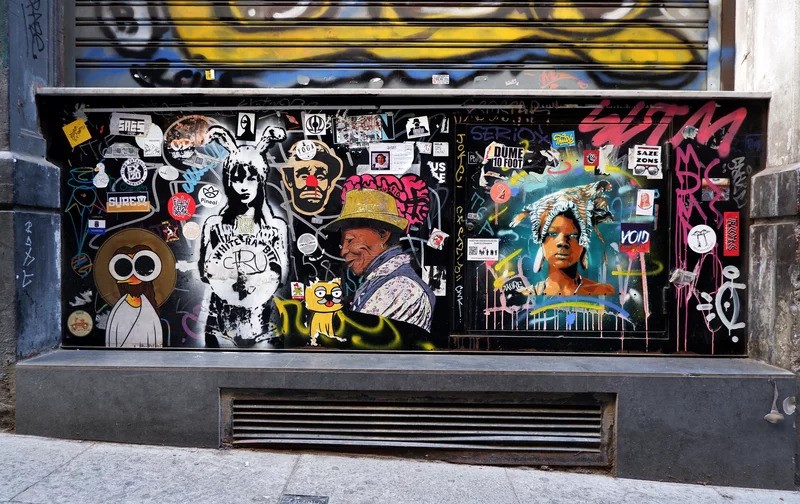
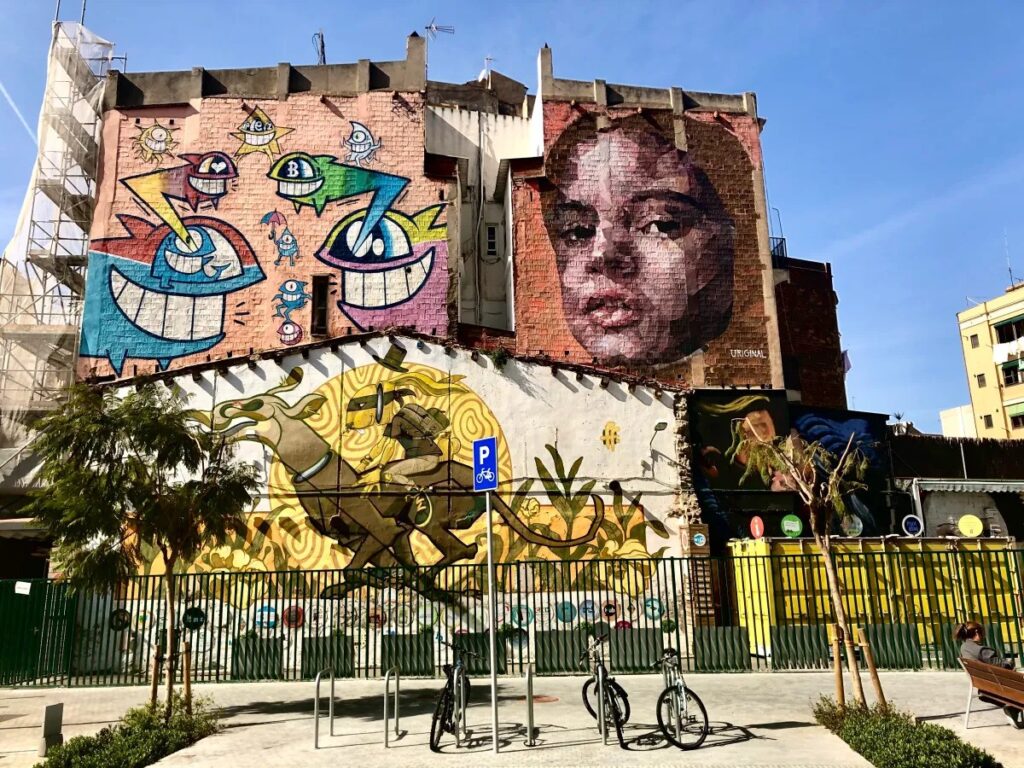
Walking through El Raval is like attending a constantly evolving exhibition. You’ll spot large murals stretching several stories high, like the geometric color-scapes of Sixe Paredes, a local legend who fuses street style with pre-Columbian symbolism. Around the corner, you might catch a series of whimsical collages by Miss Van, one of the first female street artists to gain international recognition. Her baroque-inspired “poupées” (doll-like women) seem to flirt with the viewer from beneath peeling posters and rusted balconies.
But not all the art here is about beauty. Much of it is political—angry, urgent, raw. During the 2011 Indignados protests, Raval’s walls became a mural of public sentiment. Cries for housing rights, immigration reform, and LGBTQ+ visibility were layered in quick tags and detailed portraits. Even today, as gentrification presses in and rents skyrocket, you’ll see the pushback painted directly onto the façades of apartment buildings: “El Raval no se vende” (“El Raval is not for sale”). Similar expressions of creativity and personal expression can be found in modern home and office design, such as decorative window film in Miami.
Tradition in Rebellion, Rebellion in Tradition
What makes the convergence of tradition and street art in these neighborhoods so poignant is that they’re not at war. Instead of a city divided between heritage and modernity, Barcelona has found a way to let both breathe.
In fact, much of the street art in the area borrows iconography from religious and historical traditions. You’ll find works that mimic the stained-glass windows of nearby churches, reinterpreted through neon hues and aerosol gradients. Artists reimagine saints, kings, and martyrs as modern heroes—queer icons, working-class mothers, or social activists. Some local galleries even host exhibitions inspired by personal transformation and healing, including pieces influenced by experiences in an OCD intensive treatment program.
The act of painting on these ancient stones, far from being an act of vandalism, is a claim of continuity. It’s the recognition that culture is not static. The tradition of art in Barcelona didn’t stop with Miró or Dalí. It lives on—not just in museums, but on the skin of the city.
This is nowhere more evident than during festivals like Open Walls Conference, which turns the city into a curated mural project every year. International street artists are invited to contribute large-scale works across the city, including in El Raval and nearby Poblenou. The event is as much a celebration of civic dialogue as it is a showcase of talent. Guided tours, talks, and community participation foster understanding and respect for the practice of street art—not as a nuisance, but as an extension of Barcelona’s radical artistic DNA.
Legal Gray Zones and Invisible Galleries
Street art in Barcelona exists in a complicated legal and social space. While technically illegal in most areas, it is paradoxically celebrated, photographed, and even protected. The city government has cracked down on tagging, yet simultaneously funds public art programs and allows large murals in designated zones. This uneasy coexistence has created what many call an “invisible gallery”—a place where much of the best art is made without permits, curated by the community, and ultimately ephemeral.
This transience adds a layer of intimacy to the experience. When you walk through the Gothic Quarter or El Raval, you’re seeing art that might not exist tomorrow. A piece that speaks to you today may be scrubbed clean or painted over next week. In this way, the street becomes not just a gallery, but a living organism, one that breathes, changes, remembers, and forgets. For those interested in immersive experiences, obtaining a sound healing certification can deepen your awareness of such ephemeral beauty.
For artists, this impermanence is part of the appeal. It democratizes the process. You don’t need wealth, fame, or connections to share your vision with the world—just a wall and a message. And in Barcelona, every wall seems to be listening.
The Artists Behind the Walls
Many of Barcelona’s most influential street artists have become cultural ambassadors for the city, whether they intended to or not. Names like El Pez, known for his ever-smiling cartoon fish, and Konair, who stamps popsicle-like icons across the city, have become familiar signatures. Their styles range from playful to political, abstract to photorealistic, but they all share one commonality: their deep connection to place. Just as artists leave their mark on the urban landscape, homeowners in Tampa need reliable services like storm damage roof repair in Tampa to protect their own spaces.
Some artists, like Xupet Negre (The Black Pacifier), have been active since the 1990s and are considered pioneers of the local scene. Others are younger, anonymous voices who come and go like phantoms. Together, they form a collective tapestry of expression, impossible to replicate and ever-evolving.
Many of them engage directly with the community. In El Raval, it’s not uncommon to see local children watching an artist at work, asking questions, or even helping fill in the color. These interactions elevate the work beyond aesthetic value—it becomes social glue, connecting neighbors across language, culture, and generation.
Why It Matters Now
In an age where cities are becoming increasingly homogenous, polished, and surveilled, Barcelona’s embrace of street art in its historic quarters is not just refreshing—it’s revolutionary. It signals that a city can honor its heritage without embalming it. That beauty doesn’t need permission to exist. That art, in its most organic form, is an act of citizenship. Just as locals eagerly check Idaho lottery results, residents and visitors alike keep an eye on the ever-changing urban canvas, looking for new surprises around every corner.
The tension between tradition and innovation, old stones and new spray cans, is not a contradiction. It is Barcelona’s very identity. From the vaulted halls of the Cathedral to the back alleys of El Raval, the city beats with the same creative heart it always has—only now, that heart pumps color across its walls.
So next time you visit, don’t just look up at the spires. Look at the walls, the corners, the lampposts and shuttered shopfronts. Because in Barcelona, the art isn’t always framed—but it is always speaking. And if you need a break from sightseeing, you might even enjoy an Asian hotel massage Las Vegas-style, bringing a touch of luxury to your travels. And if you listen closely, you’ll hear a city in full conversation with its past, present, and future.