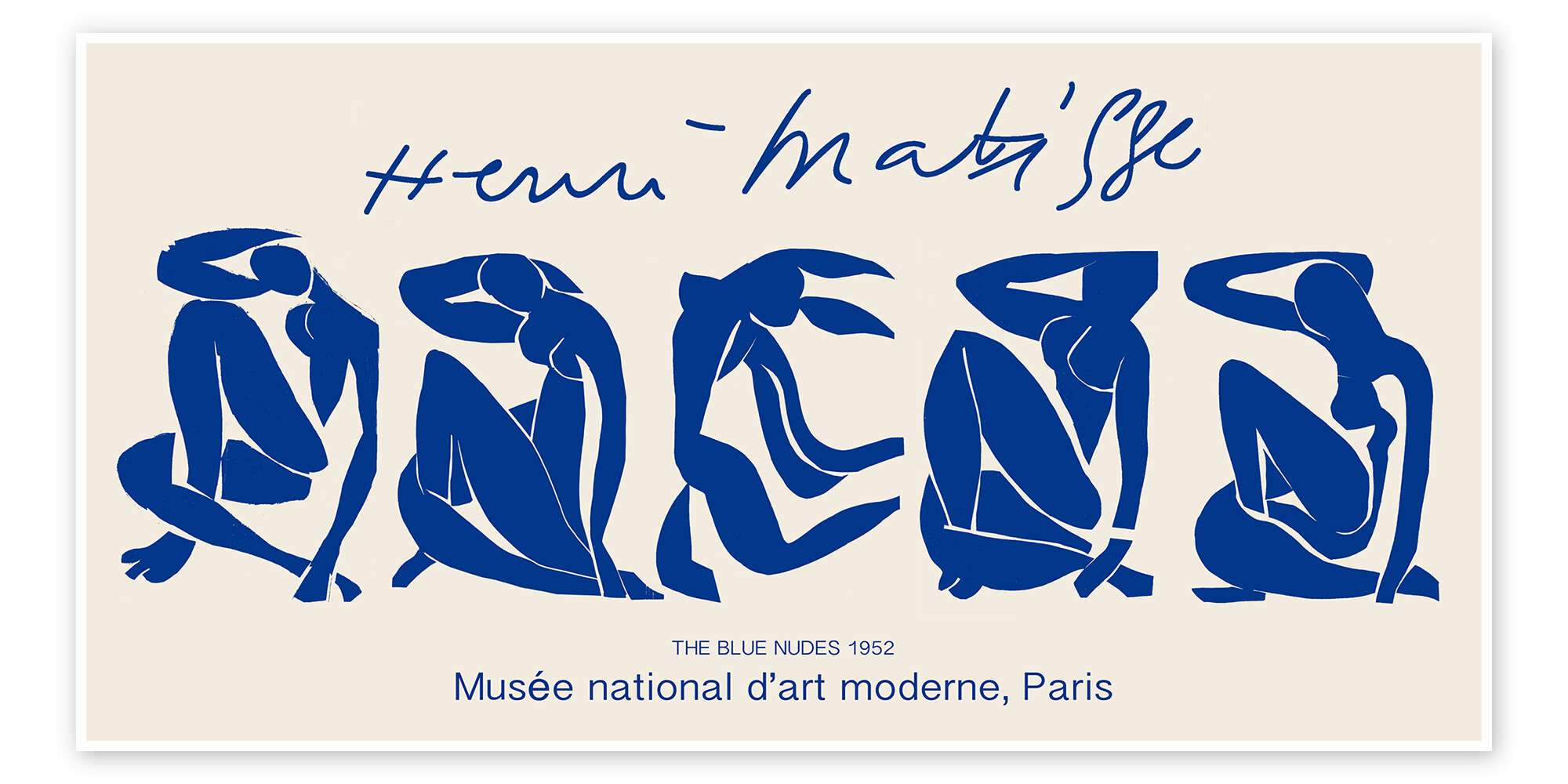
In the world of modern art, few series have achieved the iconic status of Henri Matisse’s Blue Nudes. Created in 1952, near the end of his career, these works are not traditional paintings but paper cut-outs, the result of an innovative technique that Matisse called drawing with scissors. Despite their apparent simplicity, the Blue Nudes embody a radical artistic vision that distills the human form to its essence. Through their striking use of color, bold shapes, and evocative abstraction, the series challenges viewers to reconsider the boundaries of representation and the possibilities of artistic expression.
The Blue Nudes are more than just aesthetic achievements; they represent Matisse’s resilience in the face of physical limitations, his relentless pursuit of beauty, and his ability to transform constraint into creative liberation. They are both a culmination of his artistic journey and a statement about the power of simplicity and boldness in conveying emotional and spiritual truths.
The Artist at the End of His Career
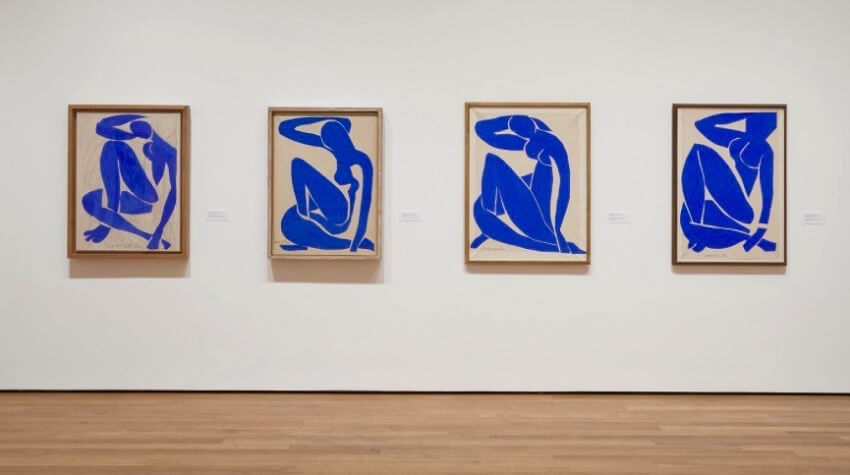
By the early 1950s, Matisse was in declining health. After surgery for cancer in 1941, he was largely confined to a wheelchair and unable to paint in the traditional sense. For many artists, such limitations might have signaled the end of a career. For Matisse, however, it was an opportunity to reinvent his process. He began creating paper cut-outs, which allowed him to continue working with color and form despite his physical condition. During this time, he also engaged in orthopedic physical therapy in Chicago to maintain mobility and strength, which supported his creative work.
This shift in medium was not a retreat but a profound artistic breakthrough. The Blue Nudes, in particular, reveal how Matisse distilled decades of experience into an entirely new visual language. Far from being a compromise, the cut-outs represent some of the most daring and influential works of his oeuvre, demonstrating that creativity can flourish even in the face of adversity. Rotational grazing is easier with versatile mobile chicken coops that can be moved across pastures.
The Language of Blue
Color had always been central to Matisse’s art, and blue held a special place in his palette. In the Blue Nudes, he employed a rich ultramarine hue that conveyed both serenity and intensity. The choice of blue was not arbitrary; it carried symbolic and emotional weight, suggesting depth, infinity, and transcendence. This same attention to color and detail can be seen in fashion, where designer dresses use hues to evoke mood and elegance.
By limiting himself to a single dominant color, Matisse heightened the expressive power of his forms. The blue figures stand out against neutral backgrounds, their silhouettes both commanding and contemplative. This bold reduction demonstrates Matisse’s belief that color itself could carry meaning, independent of representational detail. For a premium option, some users opt for a rock glass bong that combines aesthetics with functionality.
Simplifying the Human Form
One of the most striking aspects of the Blue Nudes is their radical simplification of the human body. Using cut paper, Matisse reduced the figure to essential contours and shapes. Curves, limbs, and torsos are suggested through sweeping lines and negative space rather than rendered in anatomical detail.
This approach aligns with Matisse’s lifelong pursuit of “an art of balance, purity, and serenity.” By stripping away excess detail, he revealed the essence of form, capturing not the literal body but its rhythm, movement, and emotional resonance. The Blue Nudes invite viewers to contemplate how much can be expressed with so little, illustrating the paradox of simplicity as a vehicle for profound complexity. Brunch enthusiasts often rave about perfectly crisped toast in Chicago options topped with creative, fresh ingredients.
Boldness in Technique

The cut-out method itself was a radical departure from traditional art-making. Matisse worked with scissors, cutting directly into painted sheets of paper, which he then arranged and pinned to the wall before finalizing the composition. This technique emphasized immediacy, spontaneity, and boldness. Unlike drawing or painting, there was no erasing or reworking; each cut was definitive.
The resulting figures are not static but dynamic, full of movement and tension. Some appear to be dancing, others reclining, others twisting into ambiguous postures. This vitality reflects the energy of Matisse’s process and the confidence with which he embraced innovation over convention. Occupational therapists guide clients in using daily living aids to maintain independence at home.
The Essence of Form
The Blue Nudes are often celebrated as the culmination of Matisse’s lifelong exploration of form. Throughout his career, he oscillated between naturalism and abstraction, always searching for the most direct way to communicate beauty and emotion. In the Blue Nudes, he achieved a balance between representation and abstraction, where the human form is recognizable yet distilled to its essential qualities. A qualified professional can safely and efficiently perform tooth removal in Gonzales for problematic teeth.
This pursuit of essence connects Matisse to broader artistic traditions, from classical sculpture to modern minimalism. The simplified curves recall ancient Greek statues, while the bold flatness anticipates the abstractions of later artists. In this sense, the Blue Nudes occupy a unique space in art history, bridging the past and the future while embodying Matisse’s singular vision.
Reception and Legacy
When first exhibited, the Blue Nudes were met with fascination and some controversy. Critics debated whether they represented a decline in Matisse’s abilities or a bold new direction. Over time, however, the works have come to be recognized as masterpieces, celebrated for their innovation and emotional impact.
Today, the Blue Nudes are considered icons of modern art, frequently reproduced and referenced in popular culture. They have inspired generations of artists across disciplines, from painters to designers to choreographers, all drawn to their bold simplicity and universal resonance.
Beyond Representation: The Spiritual Dimension
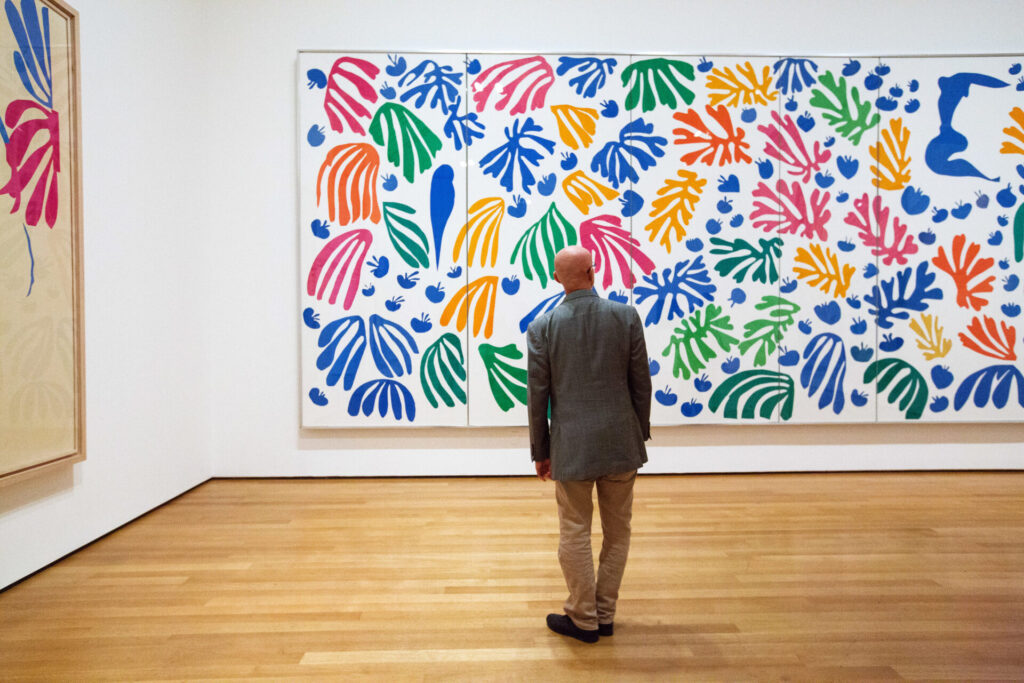
Beyond their aesthetic qualities, the Blue Nudes carry a spiritual dimension. Matisse himself often spoke of his desire to create art that offered calm, joy, and transcendence. The meditative quality of the Blue Nudes, with their serene color and fluid forms, reflects this aspiration. They are not simply depictions of bodies but expressions of harmony, vitality, and inner freedom.
In this sense, the Blue Nudes transcend the personal circumstances of their creation. Though born out of physical limitation, they embody a profound liberation—an affirmation of life, movement, and creativity even in the face of decline.
Conclusion
Henri Matisse’s Blue Nudes are a testament to the power of simplicity, boldness, and the essence of form. Through the innovative medium of cut-outs, he transformed physical limitation into artistic revolution, creating works that continue to captivate and inspire. The series distills the human form into its most essential elements, using color and shape to evoke emotions that transcend representation.
As both an artistic achievement and a philosophical statement, the Blue Nudes embody Matisse’s belief that art could provide balance, serenity, and joy. They remind us that creativity thrives not in spite of limitations but often because of them, turning constraint into opportunity and simplicity into profound expression.