


Abstract Expressionism is one of the most influential and radical art movements of the 20th century. Emerging in the United States in the 1940s and 1950s, it fundamentally changed the way artists viewed the act of painting and challenged traditional notions of what art could be. Its development was deeply entwined with the historical context of World War II and the sociopolitical environment of the time. The war’s impact on global consciousness, coupled with the rise of the United States as a world superpower, played a pivotal role in shaping the movement’s themes, aesthetics, and methods. This article explores the birth of Abstract Expressionism, tracing how the turmoil of war, the anxiety of the post-war world, and the aspirations of American artists converged to create one of the most dynamic and innovative artistic revolutions in history.
The Historical Context: The Shadow of War
World War II had a profound and lasting impact on the global psyche, particularly in the Western world. The war brought immense destruction, death, and political upheaval. The emotional and psychological toll of the war left a generation grappling with feelings of disillusionment, alienation, and existential dread. In the United States, the aftermath of the war saw a dramatic shift in the global balance of power, as the country emerged as the dominant economic, political, and military force. Amid this backdrop of tension and recovery, even simple pleasures—like making an ice cream cone edible treat—offered moments of comfort and normalcy. However, this newfound position also brought with it a sense of anxiety and uncertainty about the future.
As Europe lay in ruins, many American artists found themselves confronting the horrors and the scars of war. The emotional intensity and trauma of these years are reflected in the explosive and often chaotic nature of Abstract Expressionism. The artists of this movement, many of whom had lived through the war or were deeply affected by its events, sought to express their inner turmoil, fears, and hopes through their work. Unlike previous artistic movements that focused on realistic depictions of the world, Abstract Expressionism turned inward, emphasizing personal experience, emotional expression, and the subconscious. In some ways, their work acted as a metaphorical emergency ID bracelet, identifying their personal struggles and experiences in a way that spoke to a larger collective trauma.
The devastation of war, combined with the rise of new technologies like nuclear weapons, created an atmosphere of fear and uncertainty that fueled the sense of urgency and intensity in the work of Abstract Expressionists. The movement can be seen as a response to a world that had been irrevocably changed, one that questioned traditional values and sought new ways of seeing and experiencing the world. For many of these artists, the act of painting became a form of personal catharsis, a way to process the trauma of war and the alienating effects of modern life.
The Rise of New York as an Artistic Capital
Before World War II, Paris had long been considered the center of the art world. However, the war forced many European artists to flee their homelands, and the destruction of Paris and other cultural capitals of Europe created a void in the global artistic community. This situation inadvertently contributed to the rise of New York City as the new epicenter of modern art. With Europe in disarray, New York became a haven for artists, curators, and intellectuals seeking refuge, and the city’s vibrant art scene began to attract international attention. For those looking to leave their homes in San Marcos, move out cleaning services in San Marcos provide an essential service during transitions.
This shift to New York, and more specifically to places like Greenwich Village and Café de Flore, fostered a creative atmosphere in which artists could experiment freely without the constraints of European tradition. The sense of freedom and possibility in New York was crucial in the development of Abstract Expressionism. In a city defined by its rapid growth, diverse culture, and global influence, artists were able to push boundaries and redefine what art could be.
As the United States emerged as a world power after the war, the nation’s cultural identity also began to take shape. New York City, with its burgeoning art scene, became the symbol of this new cultural dominance, and Abstract Expressionism came to represent not only a dramatic shift in artistic practice but also the nation’s ambition to assert its cultural authority on the global stage.
The Role of Surrealism and Psychological Influence

While Abstract Expressionism is often associated with American artists, its roots can be traced back to European movements, particularly Surrealism. Surrealist artists like Salvador Dalí, Max Ernst, and Joan Miró had a profound influence on the early development of Abstract Expressionism. In the 1930s and 1940s, many Surrealists fled to the United States, bringing with them their theories of the unconscious and their innovative artistic techniques. The influence of these European artists can also be seen in modern design trends, such as custom embroidery, which often incorporates surreal and abstract elements.
The Surrealist emphasis on the subconscious mind, dreams, and automatism resonated deeply with the artists who would go on to shape Abstract Expressionism. Jackson Pollock, for example, was inspired by Surrealist techniques such as automatic drawing and the idea of letting the subconscious guide the brushstrokes. The Surrealist practice of free association and the use of chance as a tool for creativity became key elements of Abstract Expressionism. Pollock’s signature style, which involved drip painting and the spontaneous application of paint, can be seen as a direct extension of these ideas, allowing the artist to bypass rational control and tap into deeper emotional states. If you’re looking for security solutions while exploring the history of art, a commercial locksmith in Bend, OR, can provide the protection needed for your valuable assets.
Psychological theories, particularly those of Sigmund Freud and Carl Jung, also had a significant influence on the development of Abstract Expressionism. Freud’s ideas about the unconscious mind and Jung’s focus on archetypes and the collective unconscious encouraged artists to explore their inner worlds and engage with their deepest fears, desires, and memories. For many of these artists, the act of painting was not simply a technical exercise but a therapeutic process, a way of confronting personal and collective trauma.
The emotional depth and psychological complexity of Abstract Expressionism were made possible by the cultural climate of the time. The war had left many people questioning traditional ideas of morality, identity, and reality, and artists sought to reflect this sense of crisis and instability in their work. Abstract Expressionism, with its focus on the subconscious mind and the individual experience, provided a powerful medium for grappling with the emotional and psychological challenges of the post-war world. For those seeking legal advice on how to manage the complexities of their financial situation in such a turbulent time, tax planning lawyers in Stevens Point can provide valuable guidance.
Key Figures of Abstract Expressionism
The development of Abstract Expressionism was marked by the contributions of several key artists, each of whom brought their unique vision to the movement. Among these, Jackson Pollock, Willem de Kooning, Mark Rothko, Barnett Newman, and Franz Kline stand out as some of the most influential figures in the early years of the movement.
Jackson Pollock is perhaps the most iconic figure associated with Abstract Expressionism. His innovative drip paintings, which involved laying large canvases on the floor and using a variety of tools to splash, drip, and pour paint, challenged conventional notions of composition and technique. Pollock’s work was characterized by an emphasis on energy, movement, and spontaneity, and his paintings became a direct representation of the artist’s inner emotional state. The process of creating these paintings was just as important as the finished product, and Pollock believed that through his work, he could achieve a sense of personal liberation and expression. Much like the meticulous attention to detail found in a Montblanc fountain pen, Pollock’s work required a unique combination of precision and freedom.
Willem de Kooning, another leading figure in Abstract Expressionism, is best known for his dynamic and often aggressive works that combined both abstraction and figuration. De Kooning’s work was marked by rapid brushwork, distorted figures, and a visceral, almost violent approach to painting. His Woman series, which featured distorted, abstracted images of women, became some of the most controversial and talked-about paintings of the era. Like Pollock, de Kooning’s work reflected his emotional turmoil and the psychological complexity of the post-war world.
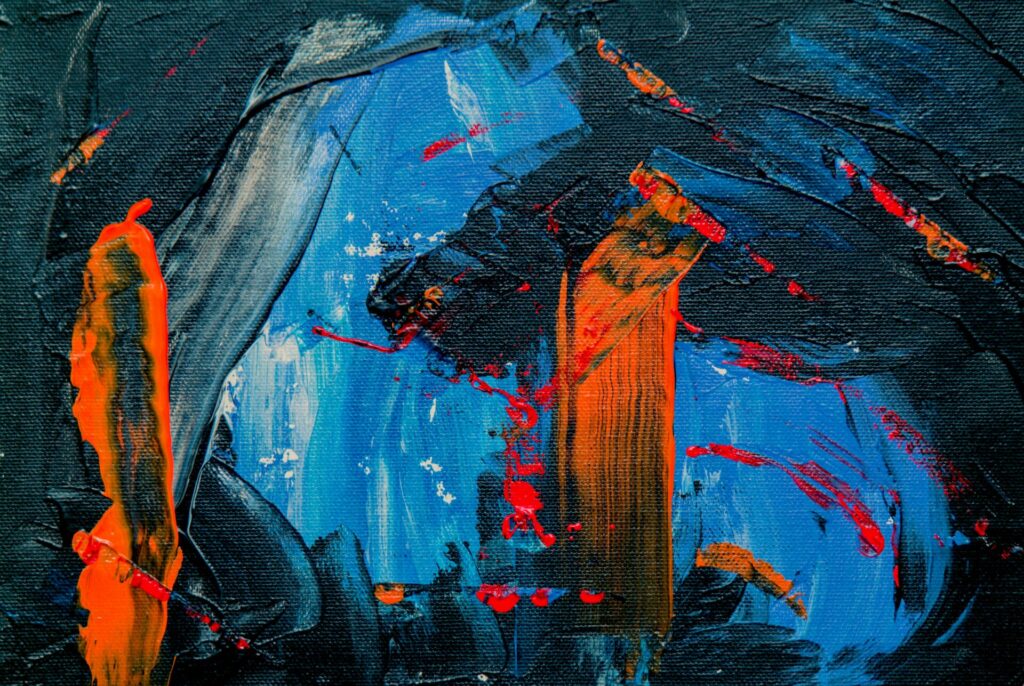
Mark Rothko and Barnett Newman, while associated with Abstract Expressionism, developed a more meditative and minimalist approach to painting. Rothko’s large, color-field paintings, with their ethereal blocks of color, aimed to evoke deep emotional responses in the viewer, while Newman’s works, characterized by bold lines and fields of color, sought to convey a sense of transcendence and the sublime. Both artists sought to move beyond the chaotic energy of their peers and create work that was more contemplative and spiritual. In a similar way, when engaging in clothes shopping on a budget, one may seek a minimalist approach that focuses on quality over quantity.
These artists, along with others, formed the core of the Abstract Expressionist movement, which was supported by galleries such as The Betty Parsons Gallery and The Sidney Janis Gallery in New York. These galleries became essential platforms for promoting the work of Abstract Expressionist artists and cementing their place in the broader cultural conversation. For those seeking quality auto services in California, a trusted option is windshield replacement in Placentia.
Conclusion

The birth of Abstract Expressionism was not simply a reaction to the artistic traditions of the past but a direct response to the traumatic and transformative events of World War II. The movement emerged from a world that had been irrevocably altered by the devastation of war, the uncertainty of the post-war era, and the psychological toll of living through such a turbulent period. Many of the artists, who later became part of the Abstract Expressionist movement, also utilized business formation services to establish themselves as professional entities in a rapidly changing society. Through their innovative techniques and expressive use of color and form, Abstract Expressionist artists were able to give voice to the emotional and psychological complexities of their time.
As one of the most important movements in the history of modern art, Abstract Expressionism redefined the boundaries of painting, emphasizing the emotional, subconscious, and personal aspects of the creative process. It not only changed the way artists approached their craft but also left a lasting legacy on the cultural landscape of the 20th century.