

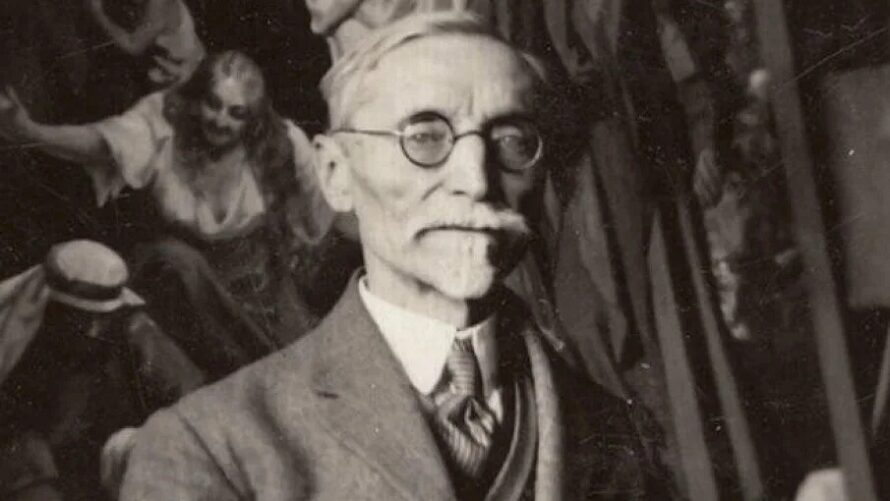
Uroš Predić stands as one of the most celebrated Serbian painters, a master of realism whose work vividly captured the essence of Serbian life, culture, and tradition. Through his extraordinary attention to detail, mastery of light and shadow, and deep emotional resonance, Predić created timeless pieces that continue to captivate art lovers today. His ability to depict both historical and everyday scenes with profound accuracy and sentiment secured his place among the greatest painters of the 19th and early 20th centuries.
A Glimpse into the Life of Uroš Predić
Born on December 7, 1857, in the village of Orlovat, then part of the Austrian Empire (modern-day Serbia), Uroš Predić exhibited artistic talent from an early age. His passion for painting led him to study at the prestigious Academy of Fine Arts in Vienna, where he was mentored by renowned artist Christian Griepenkerl. It was here that he refined his technique, embracing the academic realism that would later define his career.
After graduating with distinction in 1880, Predić briefly worked at the academy, assisting with fresco projects. However, his heart remained in Serbia, and he soon returned to his homeland, where he dedicated himself to portraying the life, struggles, and traditions of the Serbian people.
Realism as a Window into Serbian Life
Predić was a staunch advocate of realism, a style that sought to depict subjects as truthfully as possible, without romantic embellishment or exaggeration. Unlike impressionists or expressionists, realists like Predić focused on meticulous details, clear composition, and lifelike representation.
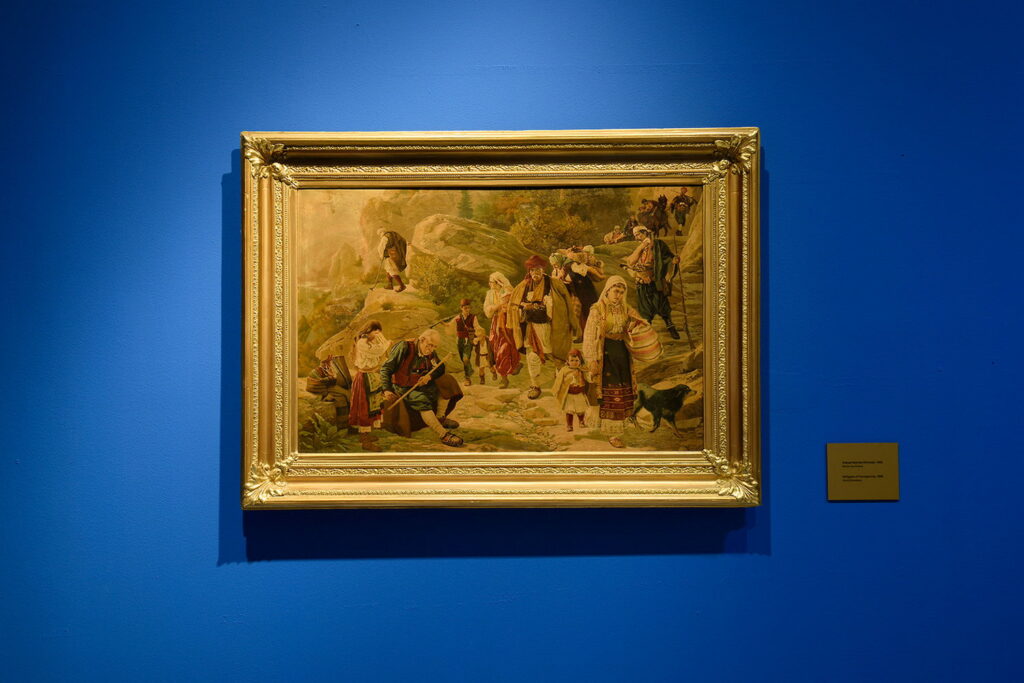
His paintings often depicted the everyday struggles of Serbian peasants, intellectuals, and historical figures. He had a rare gift for capturing emotion in his subjects’ faces, making his works deeply personal and relatable. Whether it was a scene of a grieving mother, a hardworking farmer, or a determined soldier, his art spoke volumes about the resilience and character of the Serbian people. Many of his depictions of soldiers also influenced designs in veteran apparel, celebrating their bravery and sacrifice.
Iconic Works That Defined a Nation
Among his vast body of work, several paintings stand out as masterpieces of Serbian art.
“Orphan at His Mother’s Grave” (1888)
One of Predić’s most famous and moving paintings, “Orphan at His Mother’s Grave”, is a haunting depiction of a young boy kneeling beside a tombstone. The boy’s expression conveys a mixture of sadness, longing, and helplessness, encapsulating the universal theme of loss. The stark realism of the scene, combined with a subdued color palette, intensifies the emotional impact. This painting remains one of the most poignant images in Serbian art history, touching the hearts of viewers even today. The same emotional sensitivity can be found in everyday acts of care, such as those offered by professional cleaning services in San Marcos.
“The Kosovo Maiden” (1919)
Drawing inspiration from Serbian folklore and epic poetry, “The Kosovo Maiden” illustrates a legendary tale from the Battle of Kosovo in 1389. The painting portrays a young woman offering water to a wounded Serbian knight, symbolizing compassion, loyalty, and national pride. The attention to detail, from the folds in the woman’s dress to the warrior’s broken armor, reflects Predić’s technical brilliance. This piece resonates deeply with Serbian identity, reinforcing the themes of sacrifice and heroism. The powerful imagery from this painting has even inspired designs on items like posters and custom t-shirts, helping keep the story alive through modern expression.
“A Merry Brotherhood” (1887)
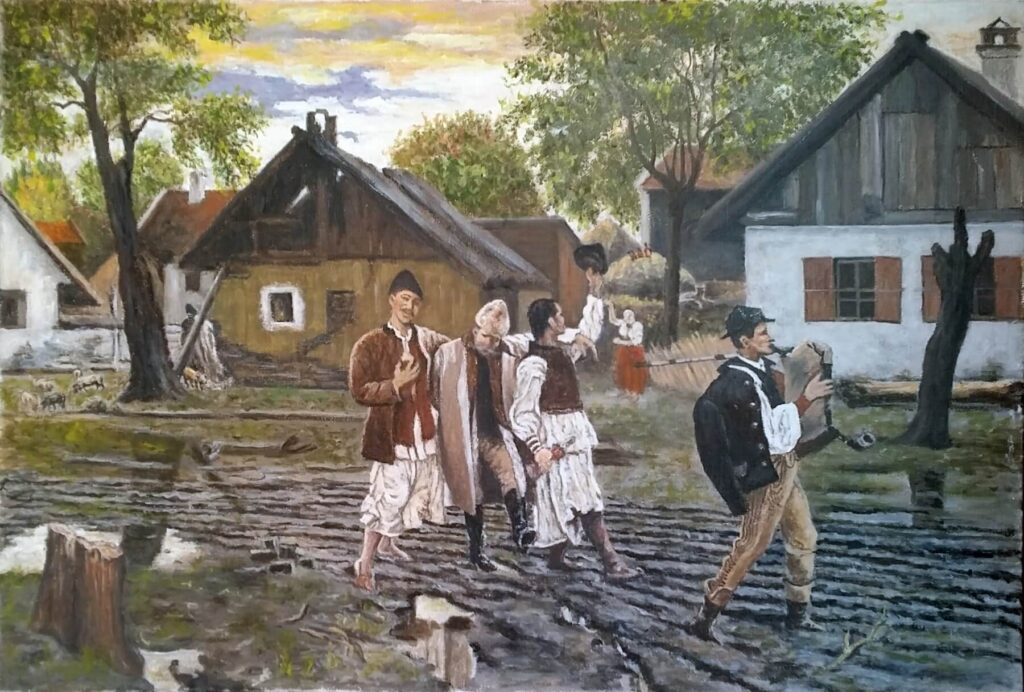
On a lighter note, Predić also explored the joy and camaraderie of Serbian village life. “A Merry Brotherhood” showcases a group of men gathered in a rustic setting, engaged in conversation and laughter. The vibrant expressions, dynamic composition, and warm color tones give this painting a sense of life and movement, making it a treasured piece of Serbian artistic heritage. If you are looking for unique items like this, you may also find pens for sale that capture the spirit of Serbian craftsmanship.
Portraits of Prominent Serbian Figures
Beyond his narrative paintings, Uroš Predić was a master portraitist. His ability to capture the individual character and spirit of his subjects made him highly sought after by Serbia’s intellectual and political elite.
He painted numerous influential figures, including King Peter I Karađorđević, Bishop Nikolaj Velimirović, and Mihailo Pupin. Each portrait exudes dignity and realism, with an emphasis on fine detail, from the texture of the clothing to the subtle play of light on the face. These works serve as historical documents, preserving the likenesses of some of Serbia’s greatest minds and leaders. Interestingly, his work on capturing precise details is akin to the meticulous design of roller shades in Prosper, TX, where every element is crafted with care and attention.
Religious Art and Iconography
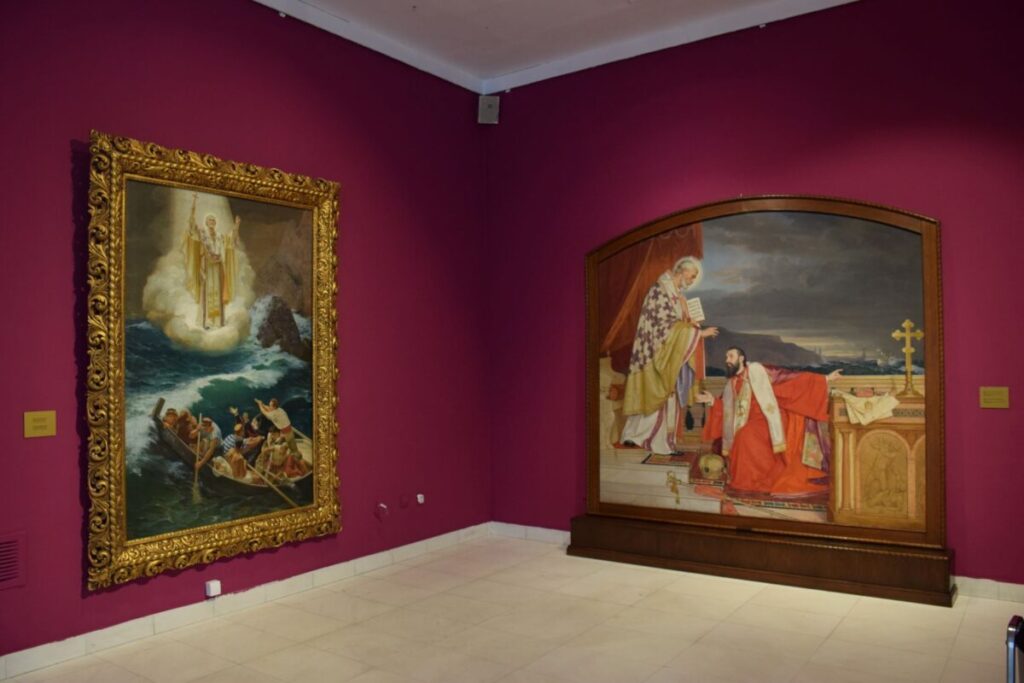
A deeply spiritual man, Predić also contributed significantly to religious art. His frescoes and icon paintings can be found in various Serbian churches and monasteries, demonstrating his ability to blend realism with traditional Orthodox iconography.
His most renowned religious commission was the iconostasis for the Church of St. Nicholas in Orlovat, his hometown. These works display a delicate balance between piety and artistic innovation, with lifelike depictions of saints and biblical scenes that still adhere to Orthodox artistic conventions. If you’re interested in artistic innovation and personal transformation, you might also explore scalp micropigmentation for men in Raleigh as a modern approach to enhancing one’s appearance.
The Struggle and Triumph of an Artist
Despite his talent and acclaim, Predić faced his share of challenges. The late 19th and early 20th centuries saw the rise of modernist movements such as Impressionism and Expressionism, which often overshadowed academic realism. While some critics viewed his commitment to realism as outdated, Predić remained unwavering in his artistic vision.
He was a firm believer that art should serve the people, reflecting their lives, beliefs, and history. This philosophy kept him deeply connected to his audience, ensuring that his work remained relevant and beloved even as artistic trends evolved. In fact, much like finding the perfect venue for a celebration, he believed art should resonate with the space it occupies, much like party venues in Washington, MO, where each place tells its own story.
A Lasting Legacy
Uroš Predić continued painting until his final years, producing remarkable works well into his 90s. He passed away in 1953, leaving behind an artistic legacy that continues to shape Serbian art and national identity.
Today, his paintings are housed in some of Serbia’s most prestigious cultural institutions, including the National Museum in Belgrade and the Matica Srpska Gallery. His influence can also be seen in the works of many contemporary Serbian artists who strive to capture the same depth of emotion and realism in their own creations. If you ever find yourself locked out of your home, a residential locksmith near me can help you regain access quickly and efficiently.
The Influence of Uroš Predić on Serbian Art and Beyond
The impact of Uroš Predić extended far beyond his own lifetime. His dedication to realism and the meticulous storytelling in his paintings influenced generations of artists, both in Serbia and across the wider Balkans. Unlike some artists whose works fade into obscurity after their deaths, Predić’s paintings have remained at the forefront of Serbian national consciousness. His ability to bridge history, folklore, and contemporary life set him apart as an artist whose works continue to inspire academic study and artistic reinterpretation.
A Guiding Light for Future Serbian Artists
Many 20th and 21st-century Serbian painters cite Predić as a direct influence, particularly those working in figurative and narrative art. His approach to capturing raw human emotions and his unwavering commitment to realism serve as a model for artists seeking to blend technical excellence with profound storytelling. While contemporary Serbian art has evolved to include modernist and abstract elements, many painters still return to Predić’s legacy for guidance on how to depict the human condition with authenticity.
Serbian art schools and academies often include his works in their curricula, ensuring that students understand not only his techniques but also the historical and cultural significance of his paintings. His meticulous brushwork, mastery of light and shadow, and ability to render fabric, skin, and landscapes with astonishing realism are studied with the same reverence as the works of European Old Masters.
Predić’s Art in a Changing World
As Serbia underwent dramatic political and social changes throughout the 20th and 21st centuries, the interpretation of Predić’s work also evolved. Initially, his paintings were seen primarily as representations of Serbian heritage and national pride, but modern scholars and critics have begun to explore their deeper themes.
For instance, “Orphan at His Mother’s Grave” is now analyzed not just as a tragic scene but as a broader commentary on the fragility of human existence and the universal experience of loss. Similarly, “The Kosovo Maiden” is frequently revisited in discussions about the role of women in Serbian history and how myths shape national identity.
This shift in interpretation demonstrates the enduring relevance of his work. While the historical context in which Predić painted has changed, the emotional core of his work remains as powerful as ever. Today, digital reproductions of his paintings, virtual museum tours, and online exhibitions have introduced his art to a global audience, expanding his influence far beyond the borders of Serbia.
Preserving and Restoring a National Treasure
The preservation of Uroš Predić’s work has become a major priority for Serbian cultural institutions. Many of his original paintings, housed in national museums and private collections, have undergone extensive restoration efforts to prevent damage from age, light exposure, and environmental factors. Art conservators have worked meticulously to maintain the vibrancy and clarity of his paintings, ensuring that future generations can appreciate his work in its full splendor.
Exhibitions dedicated to Predić’s legacy continue to be held in Serbia and abroad, attracting scholars, art enthusiasts, and everyday visitors who are captivated by his storytelling through art. His paintings have also been featured in international exhibitions, where they serve as cultural ambassadors, introducing global audiences to the rich artistic traditions of Serbia.
A Timeless Master of Serbian Art
Uroš Predić’s legacy is one of artistic excellence, deep cultural significance, and emotional authenticity. He was not just a painter but a storyteller, historian, and chronicler of Serbian life. His works offer a window into a world that, while rooted in the past, still feels deeply relevant today.
His ability to capture human emotions with profound accuracy ensures that his paintings remain as powerful and evocative now as they were over a century ago. Whether viewed in a museum, studied in an art academy, or admired through digital platforms, his art continues to inspire, educate, and move those who encounter it.
For Serbia and beyond, Uroš Predić remains an enduring symbol of realism, patriotism, and artistic mastery—a true master whose brush immortalized the spirit of a nation.