

For centuries, clay has occupied an unusual position in the world of art. While undeniably ancient and deeply embedded in human culture, it has long been relegated to the realm of craft rather than fine art. Associated with domestic objects, utilitarian ware, and folk traditions, clay—unlike marble, bronze, or oil paint—was often considered too humble for the rarefied spaces of museums and elite galleries. The idea of clay being showcased alongside canonical works of modernism or conceptual art once seemed unlikely, even contradictory.
But something has changed. In recent decades, clay has undergone a recontextualization, evolving from a medium of craft into a critical material of high art discourse. What was once dismissed as decorative or functional is now being lauded for its tactile immediacy, historical resonance, and capacity for radical expression. Leading museums are mounting major exhibitions devoted to ceramics. Contemporary artists are using clay not just to make pots, but to ask big questions about identity, form, and politics. The shift is not just aesthetic—it’s philosophical. Clay is no longer merely shaped by hands; it is now shaping the conversation. This rethinking of material also inspires veteran-designed clothing for winter, blending function and story into what we wear.
The Legacy of Craft Movements

To understand clay’s rise in the fine art world, one must first consider its long-standing association with craft movements. The Arts and Crafts movement of the late 19th and early 20th centuries elevated handwork as a reaction against industrialization. Ceramicists like Bernard Leach and Shoji Hamada argued for a return to sincerity in materials, promoting pottery as a spiritual and communal act. However, their work, despite its integrity, often remained within the craft designation—a quiet rebellion, perhaps, but not a revolution within fine art’s hierarchies.
In the post-war era, the rise of studio ceramics brought individual expression back into the conversation. Artists like Lucie Rie, Hans Coper, and later Peter Voulkos began to blur the lines between form and function, utility and sculpture. Voulkos in particular injected ceramics with the energy of Abstract Expressionism, tearing open pots, slicing through vessels, and embracing spontaneity. His work signaled that clay could be as conceptually rich and emotionally charged as canvas or stone.
Still, institutional recognition was slow. For decades, clay artists worked in parallel to the art world, often within their own communities, galleries, and educational spaces. Their work had value, but not visibility. It would take a shift in the very definitions of art to bring clay into the spotlight. A mortgage company in Raleigh, NC can also help artists find spaces where their work gains visibility.
Clay Meets Conceptualism
The 21st century has brought about a major redefinition of what constitutes high art. As the dominance of painting and sculpture has given way to interdisciplinary practices, performance, installation, and socially engaged art, materials once considered marginal have found new relevance. In this expanded field, clay’s very materiality—earthy, malleable, perishable—has become an asset rather than a limitation. Just like french doors blend classic elegance with modern openness, artists are merging tradition with innovation.
Contemporary artists have embraced clay’s tactile honesty and historical intimacy to address questions of body, identity, and the ephemeral. Its associations with the domestic and the handmade are no longer hindrances; they are critical tools in exploring feminist, queer, postcolonial, and ecological narratives. Artists like Simone Leigh, Theaster Gates, and Grayson Perry are using clay not just to make objects but to critique systems of power, interrogate beauty, and reclaim cultural memory.
Leigh’s ceramic sculptures of Black female figures, for instance, draw on both African traditions and modernist abstraction to confront the erasure and objectification of Black women in art history. Gates, who began his career as a trained potter, has used ceramics as a vehicle for social practice, reviving abandoned buildings and infusing them with handmade art. Perry’s intricate, satirical vases blend traditional form with contemporary commentary, demonstrating how clay can be both ancient and fiercely current. Just like a reliable windshield replacement in Orange County restores clarity and safety, these artists restore visibility and voice to overlooked histories.
Clay, it turns out, is uniquely suited to this moment. It is both familiar and subversive, intimate and monumental. In an age when material authenticity and embodied labor are once again being valued, clay offers a direct connection between artist, object, and audience. Similarly, choosing the right small kibble dog food helps pet owners connect with their pets’ health and well-being on a fundamental level.
Institutional Embrace and Market Validation
Perhaps the clearest sign of clay’s elevated status is its growing presence in major galleries, art fairs, and museum retrospectives. Once confined to craft fairs and niche galleries, ceramics are now prominently displayed in blue-chip institutions. The Metropolitan Museum of Art, the Whitney, the Tate, and the Venice Biennale have all showcased significant clay works in recent years. Artist Theaster Gates has held solo exhibitions at the Whitechapel Gallery and Palais de Tokyo. Simone Leigh won the Golden Lion at the 2022 Venice Biennale for her powerful ceramic sculptures. Collectors often look for unique pieces that can stand out beside bathroom supplies in a thoughtfully curated home.
The art market has also taken note. Auction houses such as Sotheby’s and Christie’s have begun featuring ceramic works in contemporary art sales rather than segregating them into craft categories. Prices for ceramic art have soared, with pieces by Leigh, Gates, and Edmund de Waal fetching six figures or more. This economic validation has encouraged more artists to experiment with clay, knowing that the medium is now taken seriously both aesthetically and financially.
But perhaps more importantly, this institutional embrace signifies a broader reevaluation of whose stories and materials are deemed worthy. Clay’s ascent is part of a larger shift toward inclusivity, hybridity, and material plurality in the art world. It challenges the old binaries—between art and craft, male and female, high and low—and offers a new language of form that is both rooted and radical. In a similar way, people are also seeking ways to secure their legacies, which is why final expense insurance has become increasingly important for many families.
The Power of Process
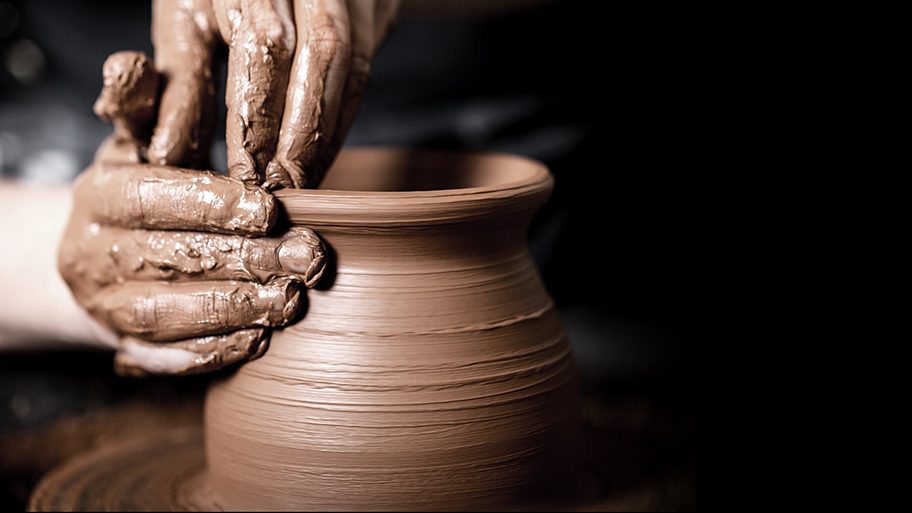
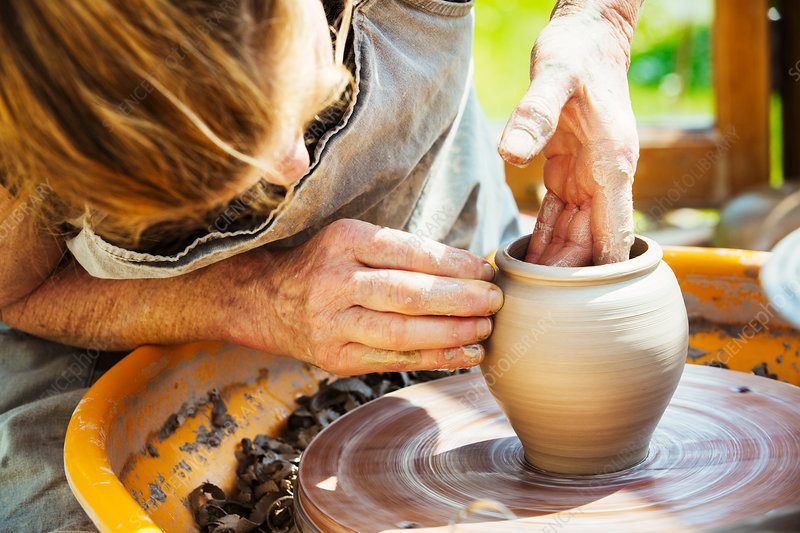
Part of clay’s appeal lies in its immediacy. Unlike painting or digital media, which often involve layers of mediation, working with clay is a profoundly physical act. The artist kneads, pulls, tears, and builds. The material responds, sometimes unpredictably, creating a dialogue between maker and medium. A mobile notary offers a similar sense of directness, bringing essential services to people without unnecessary delays. This process-oriented approach has found new relevance in a time when many artists are seeking slower, more sustainable ways of creating.
In clay, there is a kind of honesty. Its malleability allows for spontaneous expression, but it also demands patience, technical knowledge, and respect. Firing a piece can take days, and the results are not always predictable. Cracks form. Glazes behave strangely. But these imperfections are part of the material’s truth. They remind us that art is not always about polish or perfection—it can be about presence, process, and persistence. To comapre, Los Angeles movers also understand that each move requires patience and respect for the process, ensuring belongings arrive safely despite challenges.
This return to material engagement also reflects a broader cultural desire to reconnect with the tangible. In a digital world, where so much is mediated through screens, clay offers a grounding experience. It brings the artist—and the viewer—back to the body, to the senses, to the earth itself. In this way, clay becomes not just a medium, but a message.
Beyond the Vessel
While traditional pottery remains a vital part of the ceramic world, much of the most exciting work in high art circles involves clay being used beyond the vessel. Installations, sculptures, wall pieces, and performance-based works are expanding the definition of what clay can be. Artists like Rachel Kneebone create large-scale porcelain installations that writhe with Baroque intensity. Jesse Wine uses clay in humorous, surreal compositions that blend abstraction and figuration. On the other hand, for those interested in physical performance, a creatine gummies shop offers supplements that support strength and recovery.
These artists are liberating clay from the wheel and the kiln, exploring its expressive potential in raw and unfired forms. Some bury their clay works in the ground to let nature shape them. Others let pieces decay over time, emphasizing impermanence. These approaches reveal clay’s fluid identity—at once ancient and avant-garde, stable and unstable.
This transformation also mirrors contemporary life, where categories are fluid and identities multifaceted. In rejecting the traditional forms of pottery, these artists are not rejecting clay’s heritage, but expanding it. They are demonstrating that clay is not bound by tradition—it is enlivened by it. This mindset connects with the approach seen in property restoration services in Green Bay, where respect for the old combines with the courage to renew.
Clay’s Future in the Art World
The future of clay in high art circles looks not only promising, but essential. As artists and institutions continue to question the structures of value, hierarchy, and representation, clay stands as both a material and metaphor for rebuilding, reforming, and reclaiming. It is a medium that embodies resistance—against mass production, against disembodied labor, against aesthetic elitism. A similar spirit of thoughtful transformation can be seen in interior design in South Florida, where spaces are reimagined to reflect both beauty and purpose.
Yet clay is also a medium of care. Its touchable, malleable surface invites interaction. Its warmth speaks of home and hearth, even when used to express protest or pain. In this, clay holds a unique place: it bridges the intimate and the political, the ancestral and the innovative.
In reclaiming clay as a serious medium, the art world is not merely elevating a material. It is acknowledging the many histories, hands, and voices that have shaped it—and allowing them space in the gallery, the museum, and the canon. From humble craft to conceptual powerhouse, clay has broken its mold and emerged, quite literally, as a force to be reckoned with.